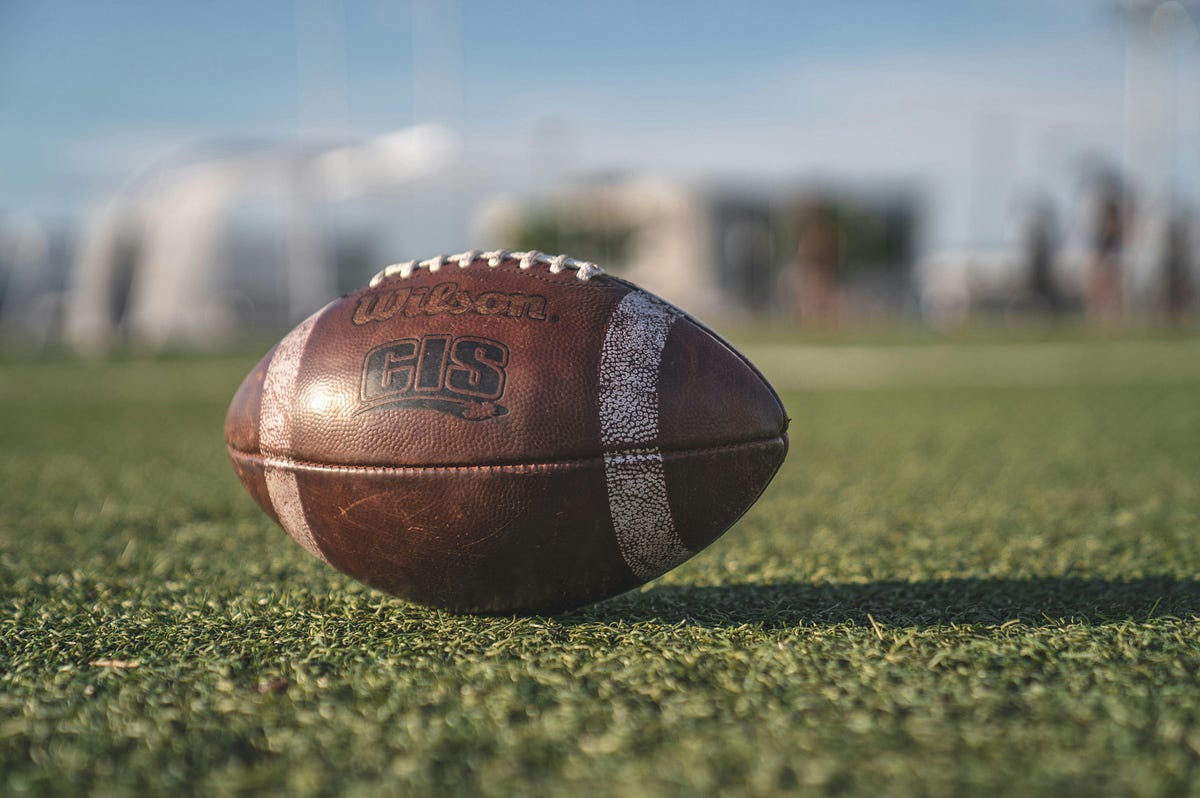
Football is the most popular sport in the United States, with a fan base of 184 million. The sport originated as a composite of rugby and soccer. Teams have 11 players on each side of the field during play, each with a defined position and purpose, including on offense.
Each team assumes a defensive or offensive formation, depending on the play. For offense, the player formation consists of five offensive linemen (OL) - NFL rules state that at least seven players on the offensive side have to be at the line of scrimmage at the start of play. The other in-field team members include the quarterback, two running backs, a tight end, and two wide receivers.
The primary responsibility of the OL is blocking opposing players and creating opportunities for the rest of the team to make runs, gain ground, and allow time and space for the quarterback to run or pass the ball downfield.
Thus, the desirable attributes for the OLs include good blocking capabilities to counter running and passing opponents, core body strength to overpower opponents, and speed and agility to deal with fast-switching defensive players. These opponents are quick on their feet and agile enough to change running routes or execute short passes, leaving the OLs flat-footed.
The OL comprises three distinct players: the center, guards, and tackles. The center positions himself in the middle of the OLs and leads the offensive line. Before a play starts, the center makes calls in code and relays the same to the coach or quarterback. Then, the coach, offensive coordinator, or quarterback determines the play. The response typically comes from the quarterback, who relays the same, in code, to the center back. The response enables the center back to assign blocking duties to the rest of the offensive line players before or after the passing or snapping the ball between his legs. Once the quarterback receives the ball, they can throw, hand it off, or run with it.
There are two guards, one on either side of the center. The guards block defensive players and protect the quarterback. For this position, the requirements include strength, size, power, and speed.
Two tackles flank the guards on either side, supporting the running plays along the line and blocking opposing defensive ends and linebackers. Other than the quarterback, the tackle positions block and intercept most of the opponents' runs and passes in the field.
The quarterback receives the ball at the start of the play, guides and leads the offense, and controls the play. Depending on the pre-determined style, mostly from practicing set-pieces and readjusting skills, the quarterback can decipher the teammates' positions and issue re-positioning orders depending on the defense's response before or after the ball is snapped.
Awareness of the positions enables the quarterback to throw to the most optimally placed and least defended receiver. If the defense intercepts the ball, it allows the team to use the most effective recovery tactic and positive response by issuing quick prompts to the team to thwart the opponents.
The running back carries the ball to gain yards upfield after receiving it from the quarterback, who lines up as a receiver to catch passes and blocks. Two types of running backs exist, the halfback and fullback, each differentiated by responsibility, strength, and size. The halfback carries passes from the quarterback and acts as the receiver for short passes.
Conversely, fullbacks combine the responsibilities of an offensive lineman and running back. They block the opponent’s tacklers before they reach the ball carrier. This opens up space to run with the ball.
The tight end stands next to the left or right tackle or further toward the edge like a wide receiver. The tight end combines the responsibilities of the wide receivers and OLs. They execute various roles, including catching passes, running routes, and blocking opponents for the quarterback and running backs.
Lastly, the wide receivers, typically the fastest players on the field, stand on both ends of the scrimmage line, near the sideline and away from the OLs. The primary purpose of the wide receiver is to evade the defense, catch passes thrown by the quarterback, and carry the ball toward the goal line. The wide receivers run pre-determined routes downfield, thus ensuring the quarterback knows where they should be for the throw.